

24 residents
The big place had a chandelier. Ask what else it had.
You toured the 120-bed building on a Tuesday. Marble lobby, a fountain, a woman in a blazer with your name already printed on a folder.
She was warm and she was good at this. You drove home with the folder on the passenger seat and couldn't say what was wrong, only that you didn't want to leave your mother there.
See the other kind of place before you decide.
No pressure and nothing to sign.
Or call Mellissa at (470) 684-3569
It isn't better and worse. It's arithmetic.
Twenty-four residents, or a hundred and twenty. Everything else follows from that one number.
Who notices she stopped finishing lunch
In a big building, a chart notices (eventually, at a care conference). Here, the woman who cooked it notices at one o'clock, because she also cooked yesterday's.
Who knows how she takes her coffee
Not a preference in a system. A person who has poured it ninety times. On a rotating floor of forty, nobody gets ninety chances.
What the hallway smells like at noon
A kitchen you can smell, or a cafeteria with a steam line and a tray cart. One of those tells a person with dementia that it's lunchtime without anyone saying so.
How many strangers she meets in a month
Large staffs run on shifts and agency fill-ins. For a mind that's thinning, a new face is work. Familiarity isn't a nicety (it's most of the treatment).
A chandelier never checked on anyone at 3am.
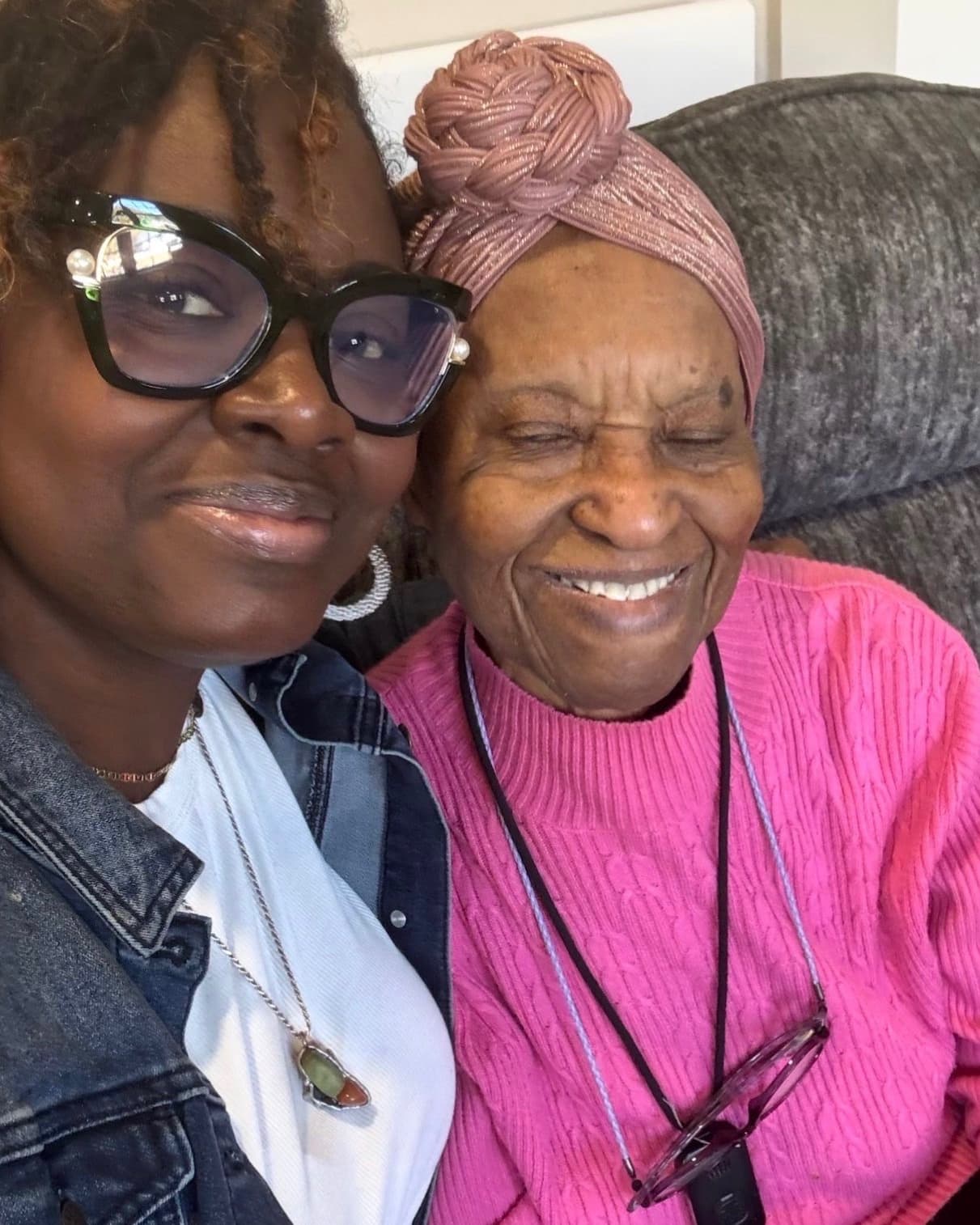
Mellissa Daniel, RN. 20+ years. She gives every tour herself.

She was in a big community for two years. Lovely lobby. I called three times about her cough before anyone called back. Here, they called me first.
Questions families ask
Small is not the same as less. Staff are awake around the clock, medications are managed by people who know each resident, and help is on hand every hour. What a large building adds isn't more care (it's more residents per aide).
We coordinate with doctors, home health, and hospice inside the home. What we can't do: skilled nursing (ventilators, IV care, two-person transfers, wound care only a nurse can do). If your parent needs that, we'll say so and help you find the right place.
It's a distinct license the state grants, with its own staffing, medication, and inspection rules, and it's inspected. It is not a nursing home license, and it isn't a lesser version of assisted living (it's the license that allows a home this size to operate as a home).
It's inside the same house, with the same small scale and the same faces, which matters more for memory loss than almost anything else. Routine does most of the work.