

Articles
The Thanksgiving Table Conversation You've Been Avoiding
By Joy Senior Living
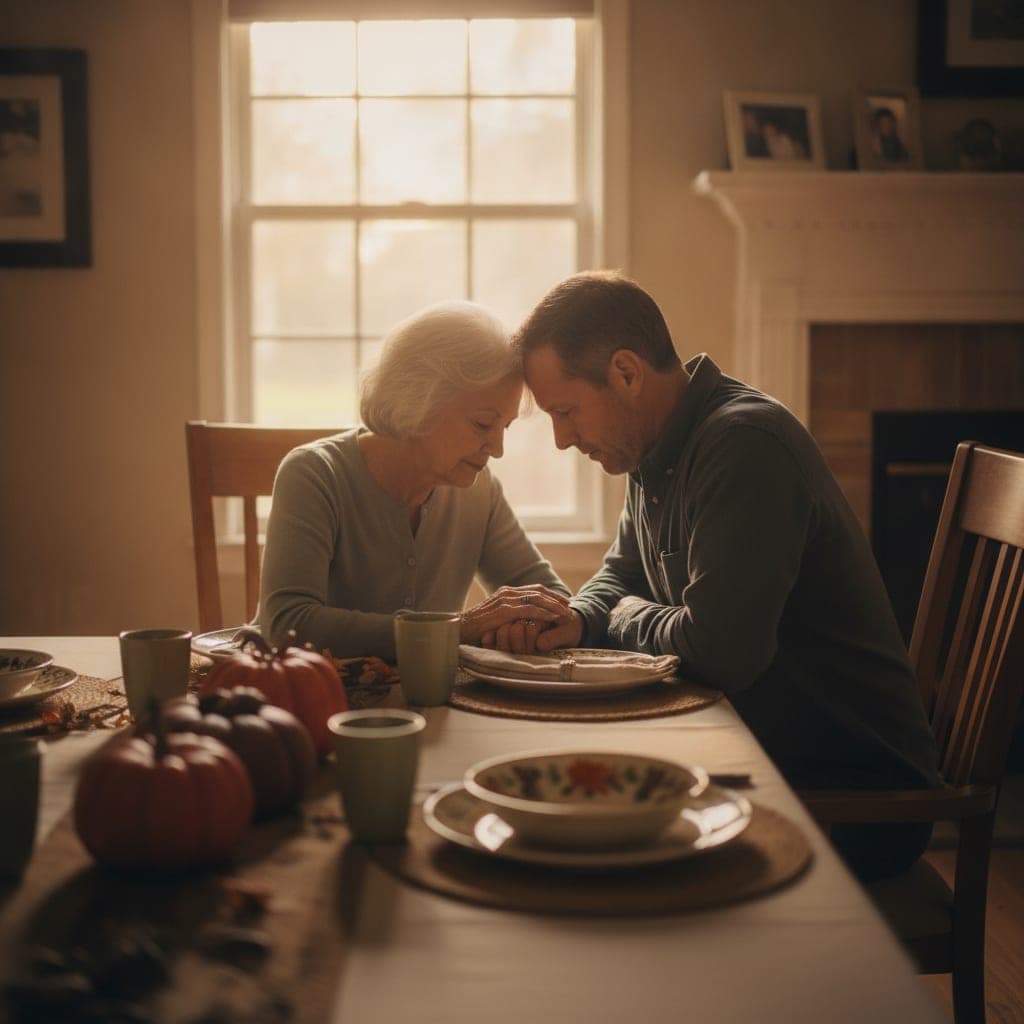
You know the conversation. You've rehearsed it in the car. Maybe you started it last Christmas and someone changed the subject to the football game.
It's the one about Mom or Dad. Whether they're still safe at home. Whether the forgetting is normal. Whether something needs to change before something goes wrong.
Thanksgiving puts everyone in the same kitchen. That makes it a good time to notice things. It can also make it a hard time to talk about them. Here's how to do both well.
Why the holidays show you more
When you call your parent once a week, you hear the version of them that can hold it together for fifteen minutes. A full day together is different. You see the fridge. You see the mail. You watch them run a recipe they've made for forty years.
Care.com's guide for adult children visiting aging parents over the holidays makes this point. A visit is a chance to see whether a parent is doing well on their own or may need more help. Silverado, which focuses on dementia care, adds that holiday gatherings in familiar settings can make small changes easier to spot.
What to notice, without playing detective
You're not there to run an exam. You're there to eat pie and pay attention. A few things worth noticing, drawn from those holiday guides:
- Repeated questions or stories in the same afternoon.
- Trouble with a familiar recipe or routine they've done for years.
- Forgetting names of family members or old friends, beyond the normal "what's his name" moment.
- Unopened mail or unpaid bills piling up.
- A change in mood. Quicker to anger, more anxious, more withdrawn, or suspicious in a way that isn't like them.
- Changes in grooming or hygiene.
- Moving more slowly, trouble with stairs, or bruises that suggest a fall.
- Getting lost while driving or walking somewhere familiar.
One sign on its own doesn't mean much. Everyone misplaces keys. Holidays are tiring and noisy, and that alone can throw anyone off. What you're looking for is a pattern, or a change from the parent you knew a year ago.
Write down what you see. Dates and details help a doctor more than "she seemed off."
Don't have the big talk at the table
This is the most common mistake. Someone notices something, worry turns into a speech, and suddenly it's a family meeting with the gravy going cold.
Your parent will feel ambushed. Your siblings will pick sides. Nobody will remember anything except that dinner went badly.
The table is for noticing. The talk comes later.
Talk to your siblings first
Before you say anything to Mom or Dad, talk with your brothers and sisters. Do it Friday morning, or on a call the next week.
Compare notes. The sibling who lives nearby may have seen things for months. The one who flew in may see changes the local one has stopped noticing. Both views matter.
Try to agree on three things:
- What you've each seen. Facts, not conclusions.
- What you're worried about most. Safety? Medications? Driving? Loneliness?
- Who will start the conversation. Usually it's the person your parent trusts most on hard topics, not the oldest or the loudest.
If you can't agree, that's normal. Start with what you do agree on.
Then talk with your parent, one on one
Pick a calm moment. A drive. A walk. Coffee after everyone else has gone home.
Some things that tend to help:
Lead with what you love about them. "I want you to stay in this house as long as it's right for you" lands better than "I don't think you can live alone."
Ask before you tell. "How have things been feeling lately? Anything getting harder?" Many parents already know. They've been waiting for someone to ask without panic.
Name one specific thing. "I noticed the stove was left on Thursday" is easier to discuss than "you're not safe."
Keep it to one step. The first talk doesn't need to end with a decision about where they live. A good first step might be a doctor's visit, a memory screening, or simply agreeing to talk again in a month.
Let them keep control where you can. Your parent is an adult. Most people accept change more easily when they help choose it.
If they push back
They might. Fear often sounds like anger. "I'm fine" can mean "I'm scared of what happens next."
Don't argue the point in the moment. Say, "Okay. I hear you. Can we check in again after New Year's?" Then follow through. A conversation that ends kindly is easier to pick up again.
If safety is at real risk, like wandering, driving dangers, or missed medications that matter, bring in their doctor. A parent will sometimes hear from a physician what they won't hear from a child.
Learning your options before you need them
Part of what makes this talk so hard is not knowing what comes next. It helps to learn the basics before a crisis forces a fast decision.
In Georgia, families searching for "assisted living" often find several types of care. One is a licensed personal care home: a smaller setting that helps with daily tasks like bathing, dressing, meals, and medications. Some personal care homes are also licensed for memory care. Others focus on in-home help, adult day programs, or larger settings.
If you're local to Loganville or Walton County, our page on care options in Loganville walks through the basics. If memory is the main worry, our guide on what to look for in memory care in Loganville has questions worth asking anywhere you visit.
Take care of yourself, too
If you're the one who lives closest, you may already be doing more than anyone at the table realizes. Rides. Groceries. Pill boxes. Late night calls.
November is National Family Caregivers Month. The Caregiver Action Network's 2026 theme is "Care Connects Us," and it's a fair reminder that caregivers need connection, too.
The Joy Senior Living hosts a free caregiver support group at 434 Conyers Rd in Loganville. You don't need to have a parent living with us to come. It's a room of people who understand what you're carrying. Call (470) 684-3569 if you'd like the next date.
The short version
Notice at the table. Talk with your siblings first. Talk with your parent one on one, kindly, and about one thing. Learn your options before you need them. And don't carry it all by yourself.
You don't have to solve everything this Thanksgiving. You just have to start.
Sources: Care.com, "Evaluating Your Parents' Well-being over the Holidays"; Silverado, "Recognizing the Signs of Dementia When Visiting Loved Ones During the Holidays"; Caregiver Action Network, National Family Caregivers Month 2026 partner overview. This article is general information, not medical advice.
Learn more about how Joy cares for residents, a personal care home in Loganville, GA.
Related reading
Come see the home
The best way to know if Joy is right for your parent is to walk through it. Book a tour, or call us at (470) 684-3569.