

articles
After the Summer Visit: The Signs Your Aging Parent Was Hoping You Wouldn't See
By Joy Senior Living
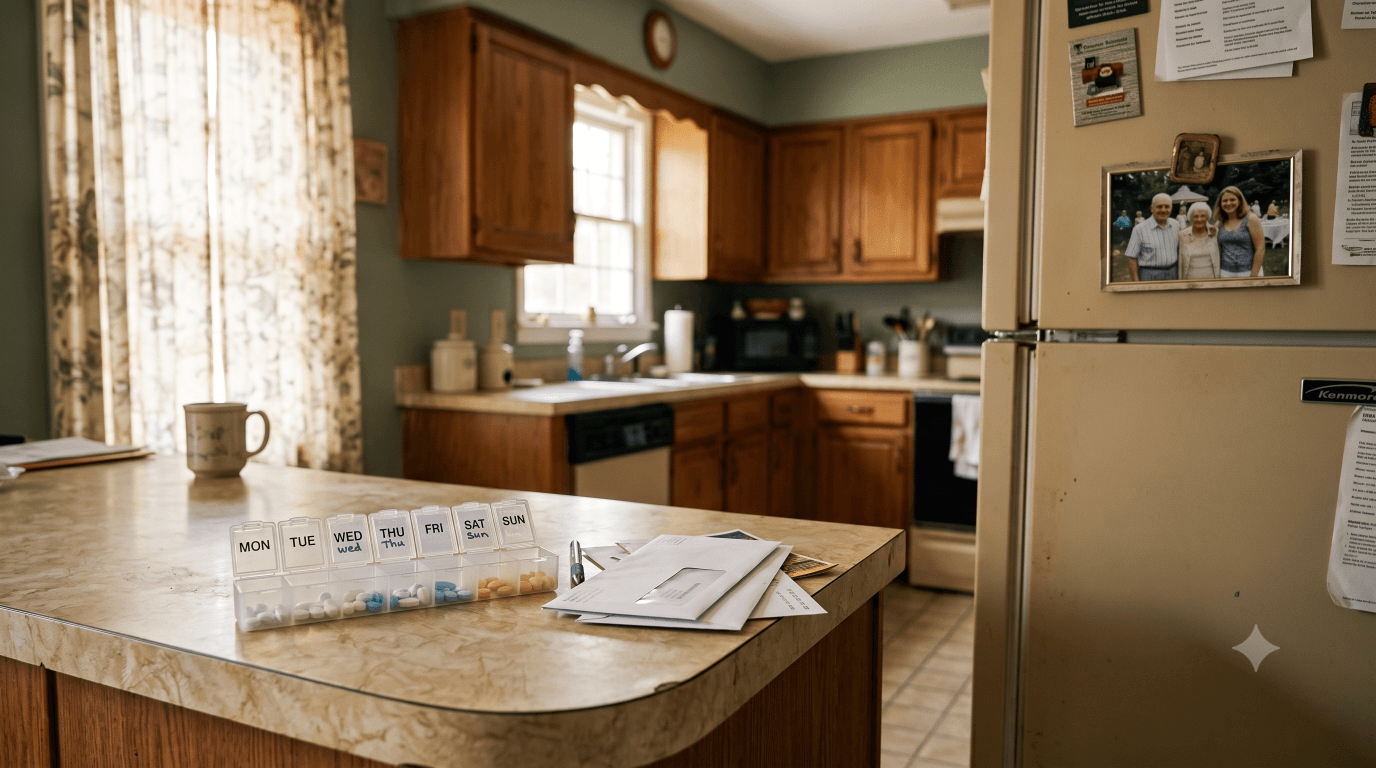
You drove home from your parent's house last week and you can't stop thinking about the refrigerator.
Maybe it was the milk — two weeks past date, sitting behind a jar of something you couldn't identify. Maybe it was the pile of unopened mail on the counter that used to be sorted the day it came in. Maybe it was the way your dad laughed off a question about his pills, or how thin your mom looked in the hug at the door. Nothing dramatic. Nothing you can point to and say, "That's the problem." Just a low, uncomfortable hum that started somewhere in Chattanooga and hasn't stopped.
If you're searching tonight for signs your aging parent needs help, you are not overreacting. You saw something. Your gut is right to keep asking.
The Summer Visit Is Where Families Actually See It
We say this to families here at The Joy all the time: the summer visit is when the truth surfaces. Phone calls hide a lot. A weekly FaceTime can go by with everything sounding fine because your mom has always been able to hold it together for eight minutes.
But three days at the kitchen table is different. You watch her open the same drawer twice looking for a spatula. You notice the smoke alarm chirping and realize she genuinely can't hear it. You see the pill organizer — Sunday still full on a Thursday. You see the bruise on her shin she can't explain.
Nothing about aging is loud. That's the hard part. It arrives in small, deniable moments — the ones that only add up when you're standing in the same room.
None of it is a crisis. All of it is information.
The Signs Adult Children Tell Us They Noticed First
We asked ourselves what we hear most often from the families who tour our home. The stories are strikingly similar. If any of these feel like a page from your own weekend, you're not alone:
Any single one of these can have a boring explanation. Three or four of them together is a conversation.
What Your Parent Is Probably Feeling
Here's the part we wish more adult children knew before they made the drive home: your parent almost certainly noticed too. They just hoped you wouldn't.
Aging parents work incredibly hard to appear fine when their kids come to town. They tidy up before you arrive. They put on the good shirt. They save the questions they've been avoiding. What you're seeing on day three of your visit is what their day-to-day actually looks like when the performance is over.
That performance is exhausting. It's often part of why they seem so tired when you finally sit down.
They're not hiding these things because they're proud or stubborn (though they may be both). They're hiding them because they are terrified you'll take something away — the house, the car, the version of themselves you've always known. Every hard conversation about senior living starts under that fear. Naming it out loud is usually the first thing that helps.
What to Do In the Two Weeks After You Get Home
Don't try to fix everything at once. Momentum from a summer visit fades fast, and a big frantic push usually backfires. A calmer sequence works better:
You Don't Have to Have the Answer Yet
The families who end up at The Joy almost never walked in with a plan. They walked in with a knot in the stomach and a notebook full of details from a summer visit. What they needed first wasn't a brochure — it was somebody to sit with them, look at the list, and tell them what it probably meant.
That's a conversation. Not a sales pitch. Not a decision.
If you're carrying that knot home from your parent's kitchen this week, we would be glad to talk — no tour required, no pressure, no timeline. Call us at (470) 684-3569 or email hello@joyseniorcare.com. We are small enough to actually pick up the phone, and honest enough to tell you if what you're describing sounds like something we can help with, something you should handle with a home care agency instead, or something to bring to your parent's doctor first.
The knot doesn't have to become a crisis. Most of the time, it just needs a next step.
— The Joy Senior Living team
Learn more about how Joy cares for residents, a personal care home in Loganville, GA.
Related reading
Come see the home
The best way to know if Joy is right for your parent is to walk through it. Book a tour, or call us at (470) 684-3569.