

articles
The First Two Weeks: What Really Happens When Someone Moves Into Senior Living
By Adam Upchurch
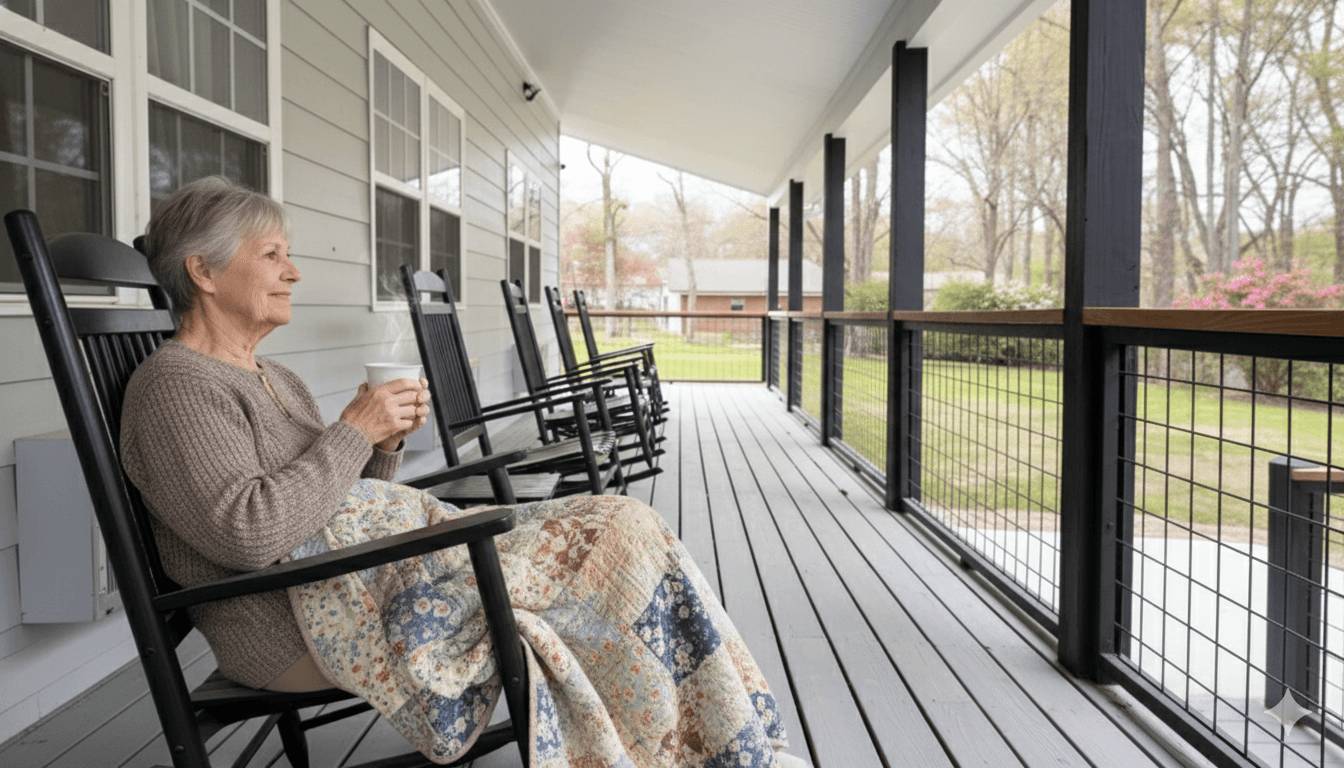
The boxes are half-unpacked. Her quilt from home is on the bed. The framed photo of Dad sits on the nightstand, angled just right.
She's quiet. Looking around. Touching the curtain.
You're standing in the doorway trying not to cry.
This is move-in day. And if you're being honest, it's one of the hardest days of your life.
But here's what nobody tells you: the first two weeks aren't about the move. They're about what comes after.
Day One is strange for everyone.
She might eat dinner in her room. She might sit in the common area and not say a word. She might call you three times before bed.
That's OK. All of it.
At a place like ours, the staff already knows her name. They know she likes her coffee with two sugars. They know she gets cold easy. They learned all of that during the tour, from the intake call, from you, the person who knows her best.
Day one isn't about getting settled. It's about letting someone feel safe enough to begin.
Days two through five are the wobbly ones.
She wakes up and forgets where she is. Just for a second. Then it clicks. The new room. The new sounds.
She might say she wants to go home.
That sentence will gut you. I won't pretend it won't.
But here's what's happening behind the scenes: a caregiver is sitting with her at breakfast, not rushing, not hovering, just being there. The kitchen already knows she doesn't like eggs but loves grits. Someone notices she lights up when the dog walks by, so they make sure she's in the common room next time the therapy pup visits.
These are small things. They're also everything.
Your phone rings around day three. Not because something's wrong. Because someone on staff wants to tell you she laughed at lunch. That she asked for seconds. That she sat on the porch for twenty minutes and watched the birds.
You didn't ask for that call. They just knew you needed it.
Days five through ten, the rhythm starts.
She's learning the schedule without trying. Coffee at eight. Activities mid-morning. Lunch with the same woman who always sits by the window. An afternoon nap, then maybe a walk down the hall.
She's not "adjusted" yet. But she's settling. There's a difference.
Staff are watching. Not in a clinical way. In a human way. Does she sleep through the night? Is she eating enough? Does she wander or seem anxious in the evenings? Is she starting to recognize faces?
They're also watching you. Because families go through their own adjustment. The guilt. The second-guessing. The urge to call every hour.
Somewhere around day seven, a good community will sit down with you. Not for paperwork. Just to talk. How are you doing? What are you noticing? What questions do you have now that the dust is starting to settle?
Days ten through fourteen, something shifts.
It's subtle. She starts using someone's first name. She has an opinion about what's on TV in the common room. She complains about the bingo caller going too fast.
Complaining is a good sign. It means she's comfortable enough to have preferences. She's not a guest anymore. She's home.
You visit and she shows you her room like it's hers. Points to where she put Dad's photo. Tells you the girl who works evenings is sweet. Mentions a resident down the hall who served in Korea, "just like your father."
She's building a life. A small one. A new one. But it's hers.
What families don't expect.
Most families brace for the worst. They expect tears, resistance, decline.
What they don't expect is the relief.
Not just theirs, hers.
She's not managing a house anymore. Not worrying about the furnace or the lawn or whether she locked the door. Not eating cereal for dinner because cooking for one doesn't feel worth it.
She has people around. Not because she scheduled a visit, but because they're just there. Down the hall. At the next table. On the porch when the weather's nice.
Loneliness is the thing that was really hurting her. And it's the thing that starts to heal first.
A word for you, the one reading this at midnight.
If you're in the middle of this decision, you already know something needs to change. You've seen the signs. You've had the conversations. Maybe you've had them ten times.
The first two weeks are hard. I won't sugarcoat that.
But they're not the story. They're the bridge.
On the other side is a version of your mom, or your dad, or your grandmother, who has help she actually accepts, people who genuinely know her, and a life that has some structure and warmth to it again.
You're not giving up on her. You're showing up for her in a different way.
And that's not something to feel guilty about. That's love.
At The Joy, we take the first two weeks seriously because we know what's at stake. Not just a smooth transition, but trust. If your family is weighing this decision, come see us. Not for a sales pitch. Just for a conversation.
Schedule a visit or call us at (470) 684-3569
Learn more about how Joy cares for residents, a personal care home in Loganville, GA.
Related reading
Come see the home
The best way to know if Joy is right for your parent is to walk through it. Book a tour, or call us at (470) 684-3569.